
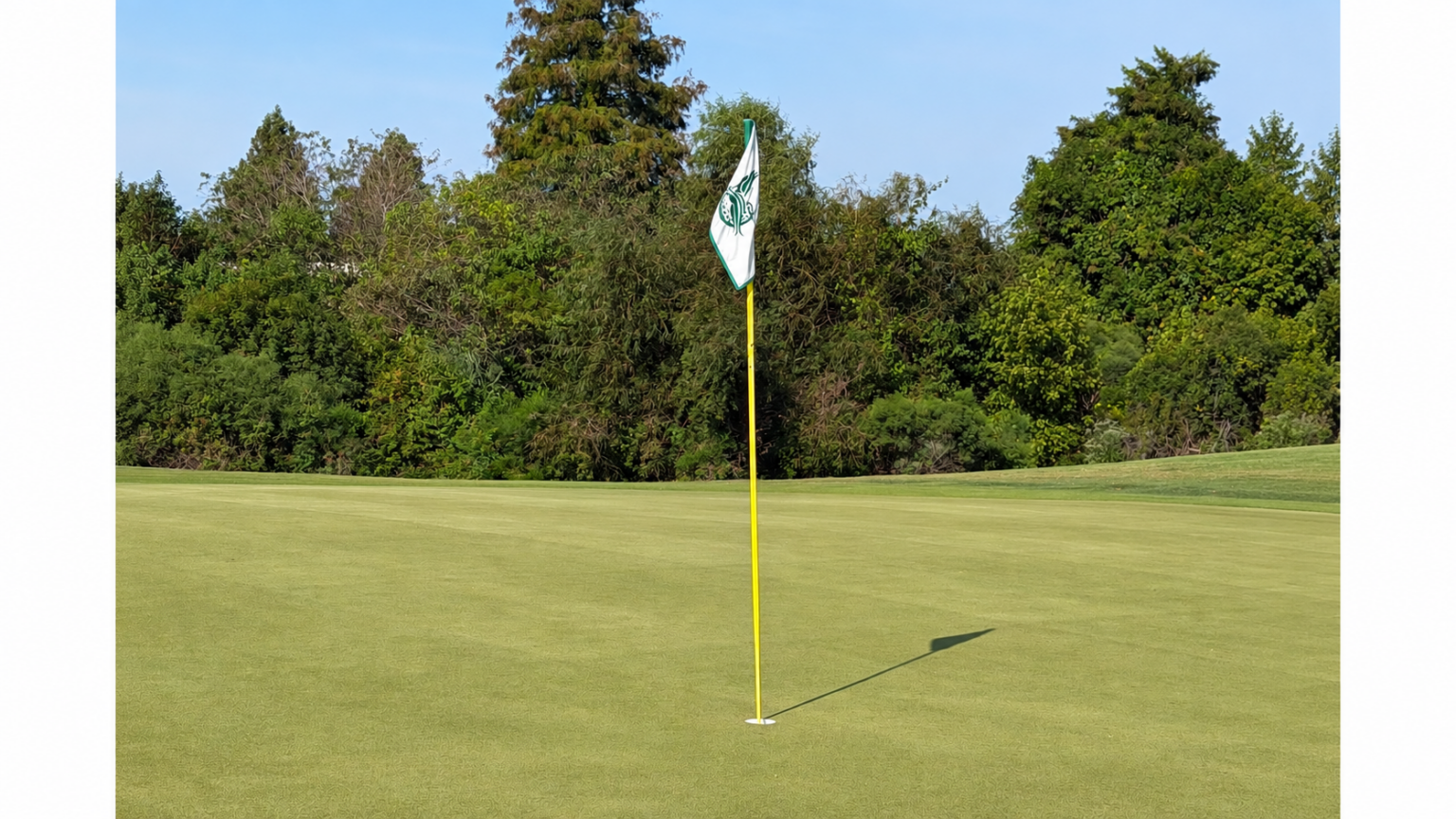
When Pelican Point Golf Club began planning a bunker renovation, golf course superintendent Mike Robinson saw an opportunity to address another challenge: aging greens that were becoming increasingly difficult to keep consistent.
The result was a broader renovation that brought Platinum TE Paspalum to all 18 greens on The Links in 2025, along with the course’s par-three tees and driving range tee areas. For Robinson, the project offered a chance to manage a turfgrass that had long been on his radar.
An Opportunity to Make a Lasting Change
Located in Gonzales, Louisiana, near the Mississippi River, Pelican Point occupies land once used as a sugar cane farm. Its 18-hole championship course, The Links, opened in 1998 and features six sets of tees. The semi-private club also includes the nine-hole Lakes course.
Robinson, a New Zealand native who entered the turfgrass industry after high school, brought experience from New Zealand, Georgia, and Louisiana to the renovation. By the time of the project, he had spent more than a decade at Pelican Point and knew the demands placed on its playing surfaces.
Pelican Point averages approximately 50,000 to 55,000 rounds annually, with most of that play on The Links. Corporate outings in spring and fall add to the traffic. The greens needed to deliver a reliable putting surface while withstanding a busy schedule.
The existing Champion bermudagrass greens had developed extensive mutations. Robinson had devoted considerable attention to soil health to keep them growing well, but differences within the turf made uniform playability increasingly difficult to achieve.
“I wasn’t super unhappy with the greens as far as health, more unhappy with the playability of them and consistency,” he explained.
With a contractor already coming to renovate the bunkers, the club decided to combine the work into one project instead of returning to members with another major renovation a few years later.
Confidence Built Through Experience
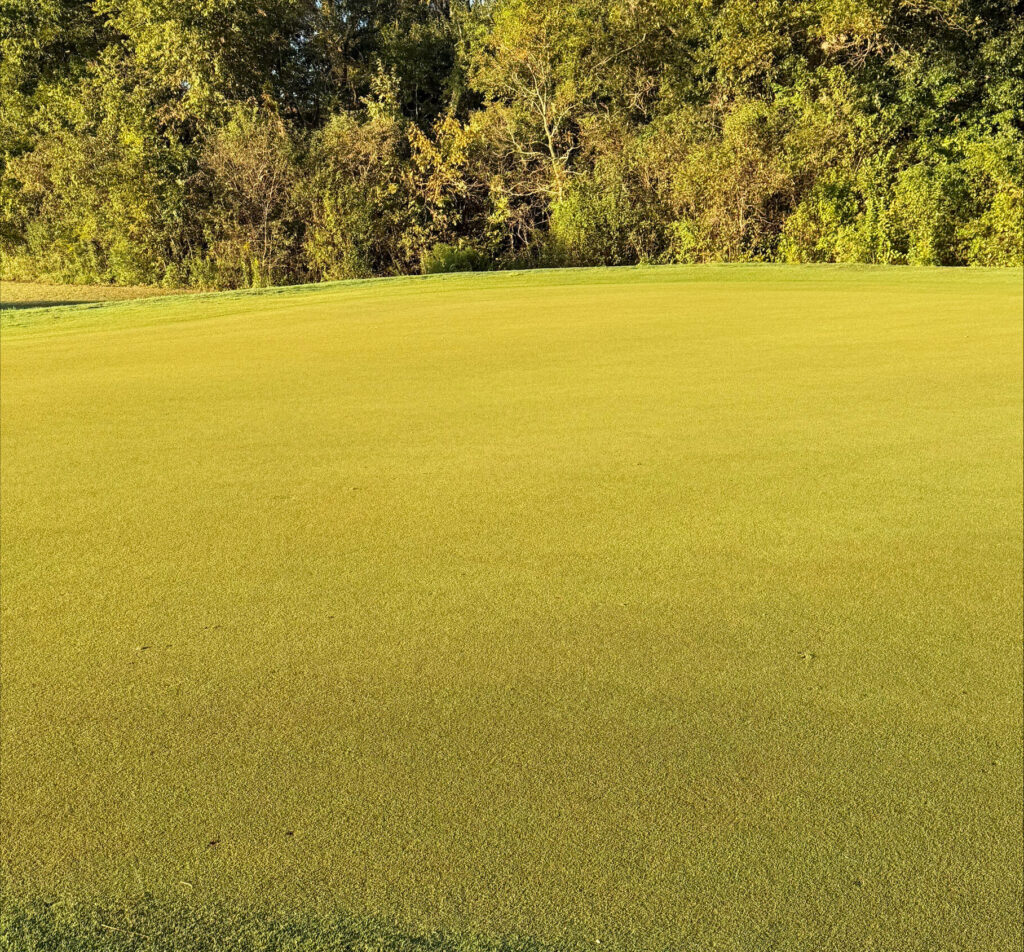
Robinson’s interest in Platinum TE began during his time at another course in Louisiana. There, a large trial nursery provided an opportunity to grow Platinum TE alongside several other turfgrass varieties as the club considered resurfacing its greens.
Although that greens project did not move forward, the nursery experience stayed with him. Robinson handled much of the grow-in and was particularly impressed by Platinum TE’s resilience under demanding conditions.
“We wanted to see which grass did the best,” he recalled. “And the Platinum TE really outperformed all of them.”
That experience helped guide his recommendation at Pelican Point. Some decision-makers were initially reluctant to move away from bermudagrass, a familiar choice in the region. Robinson made the case for evaluating a different option based on both playing quality and the potential to reduce maintenance inputs.
His expectations for water and fertilizer requirements came from his previous work with Platinum TE. He also saw an opportunity to refine maintenance practices over time.
From Renovation to Reopening
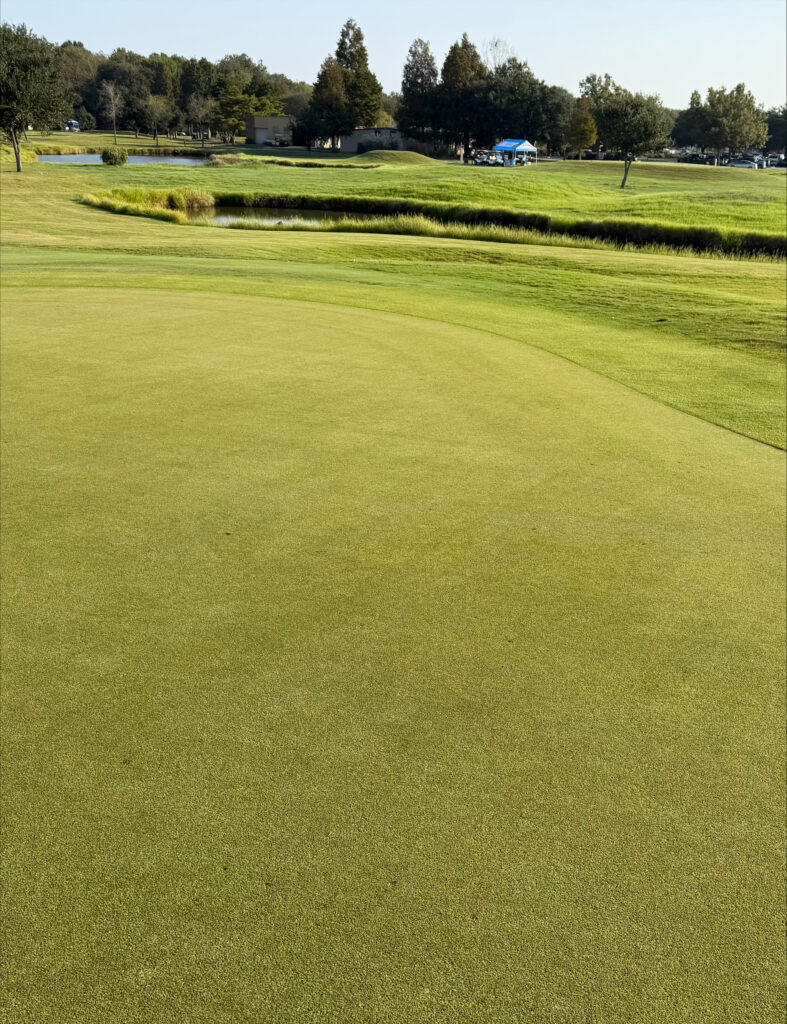
The greens renovation involved removing the upper four inches of the existing surface, tilling the remaining rootzone mix to approximately eight inches, and preparing the surfaces for planting. Pike Creek Turf Farm supplied the Platinum TE, with sprigging beginning in June 2025.
The project also expanded to include the par-three tees, which needed leveling and improved turf quality. Robinson used the opportunity to establish Platinum TE on the driving range tee areas as well.
His original goal was to have the greens ready by October 2025. They were ready for play in September, several weeks ahead of that target.
“I was amazed at how the Platinum TE responded and how quickly it established,” Robinson said. “I never would have thought I would have been open so early.”
The response from golfers rewarded his confidence. At reopening, the members immediately noticed the quality of the putting surfaces.
“They were very happy with the trueness and the consistency of them,” he said.
For golfers accustomed to bermudagrass, the renovation offered a chance to experience something different. Robinson reported that even members who had been skeptical were pleasantly surprised.
I was amazed at how the Platinum TE responded and how quickly it established. I never would have thought I would have been open so early.
Mike Robinson, Golf Course Superintendent, Pelican Point Golf Club
Smooth Roll Comes First
Robinson’s priorities for putting greens are straightforward.
“To me, consistency, smoothness of roll—that is way more important than speed,” he said.
During the months following reopening, he maintained the new greens at heights as low as 0.105 inches and reported typical green speeds around 10 feet. For a club championship during that early period, a few additional mowing and rolling passes brought speeds to approximately 11½ feet without a major change in his approach.
For Robinson, that response showed he could prepare the greens for a special event while preserving the everyday playability his golfers valued.
He also approached the first winter carefully, raising the mowing height as colder weather arrived to give the young greens an additional margin of protection. His decisions reflected a practical approach to learning the new surfaces and managing them for local conditions.
Looking Beyond the Grow-In
In the initial months after reopening, Robinson was still refining irrigation and fertility practices. He reported strong rooting and encouraging early results, while recognizing that a newly established surface takes time to understand.
A follow-up conversation after a full year with Platinum TE revealed that many of Robinson’s early expectations are becoming reality. He estimated that water use on the greens has decreased by nearly one-third compared with the previous Champion bermudagrass surfaces.
“Before it got crazy hot, we were going for five days in between watering,” he said. With the old greens, daily watering had been necessary during that period.
Robinson has also been refining his fertility program, using the first full year after grow-in to find the right balance for the developing turf. He estimated an overall fertilizer reduction of approximately 20 percent, with nitrogen use down by roughly one-third. As the greens mature and he learns more about their needs, he sees opportunities for further adjustments.
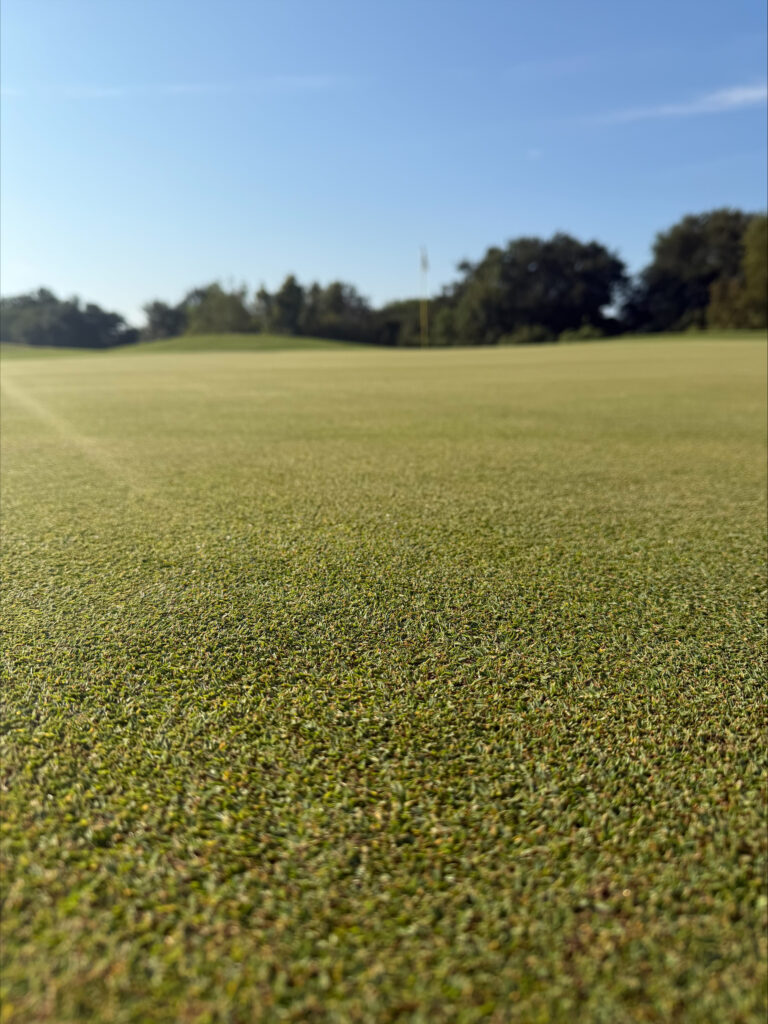
The greens’ density and performance have continued to impress him. He reported maintaining a mowing height of 0.100 inch and finding opportunities to skip an occasional day of mowing at certain times of year. The turf also handled both summer heat and a period of very cold winter weather well, he said.
For members, the benefits have been equally clear.
“They really love it now,” Robinson said. “A lot of those skeptics have come to me and said, ‘Mike, this is a great grass. It was a good decision.’”
That enthusiasm extended beyond the membership when Pelican Point hosted a Louisiana Golf Association state four-ball tournament. Players from across the state offered positive feedback, with some telling Robinson they would like to see the same turfgrass at their own clubs.
For the maintenance team, the difference has been just as welcome. Less time pulling hoses and managing water needs helped make the summer more manageable.
“It’s definitely been one of the easiest summers I’ve had in a long time,” Robinson said. “That says a lot.”
Robinson credited support from Platinum TE developer Dr. Ron Duncan and fellow turfgrass professionals as valuable resources during the transition. His advice to other superintendents considering a renovation is to investigate their options and seek out people with relevant experience.
They really love it now. A lot of those skeptics have come to me and said, ‘Mike, [Platinum TE] is a great grass. It was a good decision.’
Mike Robinson, Golf Course Superintendent, Pelican Point Golf Club
“Just think outside of the box,” he said. “Don’t be locked into the same things that we’ve always done. Research it. Don’t just take my word for it.”
At Pelican Point, that willingness to reconsider a familiar choice led to a promising start for The Links’ new greens. Platinum TE gave Robinson the consistency he had been seeking and gave golfers a difference they could feel with every putt. For a superintendent who had waited years to put his earlier experience into practice, the renovation turned a long-held conviction into a playing surface worth sharing.